
Little Inferno
Tomorrow CorporationCasual
4.31.81K Reviews
- Version
- 2.0.3.7
- Installs
- 100.00K
- Age Rating
- Teen
Screenshots

Our Review of Little Inferno
 Analysis by Appyee
I think Little Inferno works best when you approach it as a small, curious ritual rather than a conventional action game. You feed objects to a fireplace, watch them burn, and gradually discover that the simple loop has more personality than it first suggests. I found its appeal in that contrast: the activity is deliberately narrow, while the writing and the odd details around it invite you to look beyond the flames.
That makes it a distinctive casual game from Tomorrow Corporation, but not an automatic recommendation for everyone. If you want quick rounds built around reflexes, competition, or a steady stream of varied challenges, this is probably not the game I’d point you toward. If you enjoy experimentation, dry humor, and a story that reveals itself at an unhurried pace, its unusual premise has room to grow on you.
Setting Fire to Fun
So, what exactly is Little Inferno? At its core, it’s a sandbox-style game where the primary goal is to burn objects in your fireplace. Sounds simple, right? Yet, this game is anything but. It’s actually a clever mix of puzzle-solving and dark humor that keeps you coming back for more.
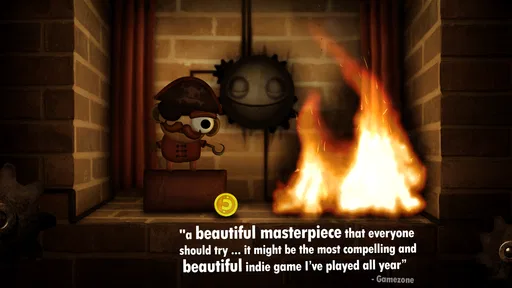
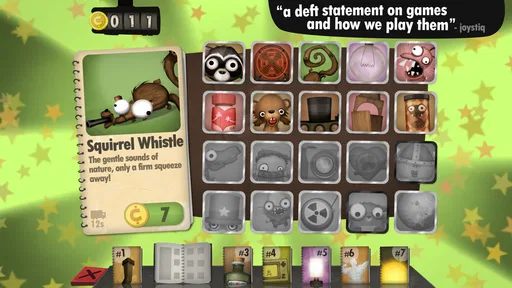
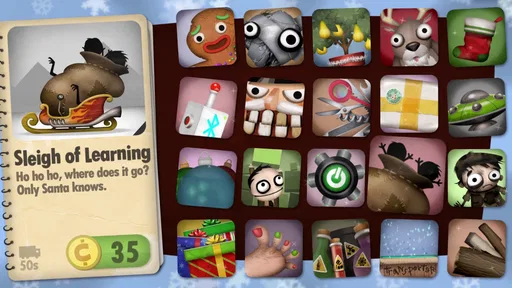
The gameplay starts with you receiving a "Little Inferno Entertainment Fireplace" and a series of catalogs filled with quirky items. The idea is to burn these items, watch them interact, and earn coins to buy even more bizarre things to incinerate. It’s like a never-ending cycle of fiery fun, and trust me, it’s oddly satisfying.
A small loop with a strong sense of texture
What hooked me is how the central action stays easy to understand without becoming visually bland. Objects behave as things you can inspect through what happens when they meet fire, and the pleasure is partly in seeing how a familiar-looking item turns into an unpredictable little event. The fireplace is not a place to master through speed; it rewards patience and attention. I’d play with sound on when possible, since the crackles and pops make the repeated actions feel more tactile, though the game’s appeal does not depend on treating every burn as a spectacle.
There is also a useful distinction between buying something and getting value from it. A new catalog item gives you another possibility, but it does not automatically solve a combo or move the story forward in a way you can predict. I found it more satisfying to buy with a question in mind—what might this object do beside another one?—than to treat the catalog like a checklist to clear as fast as possible. That small change in approach makes experimentation feel intentional instead of merely repetitive.
Burn, Baby, Burn
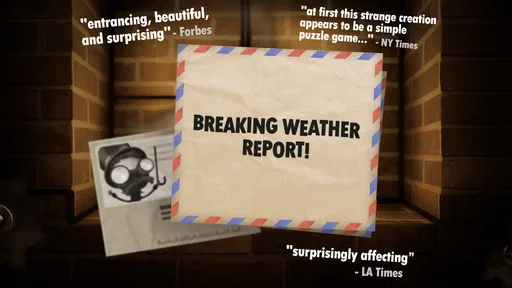
What makes Little Inferno stand out is its unique approach to storytelling. As you progress, you receive letters from various characters that add layers to the narrative. These letters are not just fillers; they’re engaging and add a sense of mystery and depth to the game. You start to piece together a bigger picture, and it's this unfolding story that keeps you hooked.
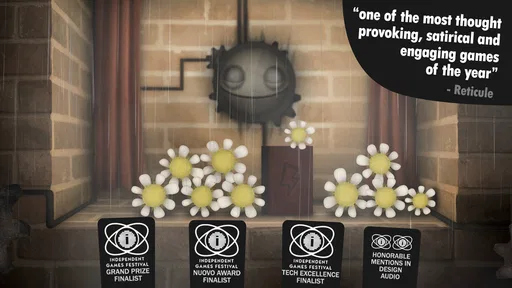
The game’s whimsical art style complements its quirky theme perfectly. The graphics are charmingly simple yet detailed enough to make each burning session visually delightful. The sound design is another standout feature. The crackling of the fire, the pop of the objects, and the catchy background music blend seamlessly to create an immersive experience.
Why the quiet pacing matters
The story works because it arrives in small pieces rather than interrupting the basic routine with constant explanation. I liked being able to pause over a letter, then return to the fireplace when I felt like it. That makes the game easy to fit into a calm break: it doesn’t demand that I remember a complicated sequence of controls just to pick up where I left off. At the same time, the gradual delivery means players who want a plot-heavy game with long scenes and a clear, fast-moving arc may find the narrative too slight or too slow.
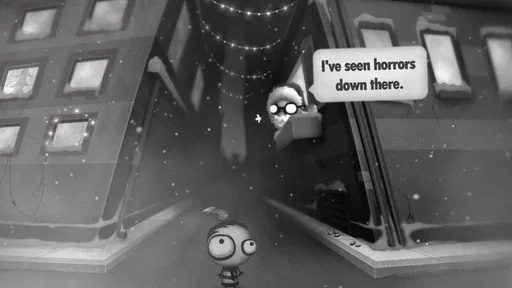
The tone also deserves a little patience. Its humor can seem cute on the surface, but the world has a lonely, uneasy quality underneath. The letters and the everyday objects create that effect more gently than a dramatic twist would. I would avoid rushing through the text just to get back to burning; paying attention to the small exchanges is part of what gives the repeated actions meaning. If you prefer stories explained plainly, the restrained approach may feel cryptic rather than intriguing.
The Puzzles and Combos
While setting things on fire is fun, Little Inferno adds a layer of challenge with its unique puzzle elements. You’re encouraged to find specific combos by burning certain items together. This adds a strategic twist, as you try to figure out which items to pair for maximum effect.
The game gives you a list of combos with cryptic names, and it’s up to you to decipher them. Some are straightforward, while others require a bit more thought and experimentation. Completing these combos not only gives you satisfaction but also unlocks more items and advances the storyline.
Experiment without turning it into a chore
My practical tip is to treat a combo clue as a prompt for associations, not as a literal instruction you must guess in one try. Think about what the title suggests, then test a pair that shares a theme or an everyday connection. When a guess fails, I’d switch one object at a time rather than changing everything; that gives each attempt a little more information. Keeping track mentally of combinations you have already tried can also prevent the experience from becoming a scattershot cycle of purchases and burns.
There is a trade-off here: experimentation is the point, but the game does not turn every clue into an obvious answer. If you dislike solving puzzles through trial and error, some combos may feel like a pause in the fun. I would resist looking up solutions immediately, because discovering a match is more rewarding when it comes from your own reading of the clue. But if a particular puzzle stalls your progress and starts to feel like busywork, a hint from outside the game may be a reasonable way to keep the story moving.
That balance also affects how I’d recommend playing in short sessions. A few burns can be relaxing, but if you are focused on a particular combo, stopping halfway through your experiments can leave you with an unfinished thought. I’d use brief breaks for casual play and save a longer stretch for when you want to work through several clues or follow the letters in sequence. The game’s gentle pace suits both, but the puzzle side feels more coherent when you have time to make connections.
Not Just a Game, But a Commentary
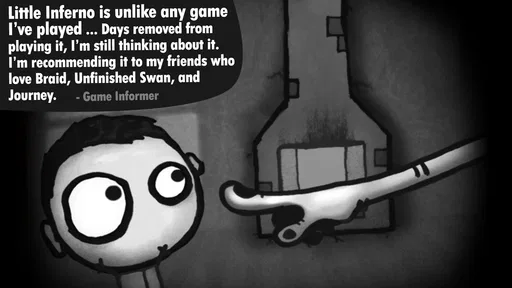
One of the most intriguing aspects of Little Inferno is its underlying commentary on consumerism and the passage of time. It subtly encourages players to reflect on their actions and the consequences of living in a world focused on burning through resources. It’s a clever way to add depth to what seems like a simple game, and it’s this thought-provoking angle that sets it apart from other apps.
Even though it’s wrapped in humor and whimsy, the message resonates, making the game not just a pastime but a conversation starter.
Who should make room for it?
I’d recommend it to players who like offbeat, self-contained experiences and don’t need a score chase or a competitive reason to return. It can suit someone who wants a quiet game to play on a sofa after dinner, especially if they enjoy noticing small visual and narrative details. A realistic way to approach it is to play a little while waiting for a meal or winding down before bed, then stop when you have had enough rather than trying to turn every session into a major milestone.
It is less suitable for anyone seeking an open-ended building game, a fast puzzle challenge, or a large variety of activities. The fireplace is the center of the experience, so players who tire quickly of repeating a core action may not be won over by the story. Likewise, if you prefer a game that gives immediate, explicit instructions for every objective, the cryptic combo names can become frustrating. I see that as a deliberate part of its character, but it is still a real barrier for some tastes.
How it compares with familiar casual games
Compared with the usual casual alternatives—match puzzles that constantly introduce new boards, endless runners built around reflexes, or relaxing games focused on decorating and collecting—this is much more focused. It does not ask me to chase a high score or keep up with a rapid sequence of levels. Instead, the variety comes from objects, their interactions, combo clues, and the letters that frame the experience. That makes it feel more like a compact interactive story with a playful puzzle loop than a broad casual pastime.
The focus is a strength if you want something unusual and low-pressure, but it also means there is less to fall back on if burning objects stops being entertaining for you. I would choose a level-based puzzle game for clearer goals and a stronger sense of constant progression, or a creative sandbox for more freedom to build and customize. This one sits between those options: it gives you room to experiment, but within a tightly defined setting and tone.
What to know before paying
On mobile, the game is a paid download at $4.99, so I’d decide based on whether its specific style appeals to you rather than expecting a free sampler. It has a 4.6 average from around 16,000 ratings, with about 1,800 written reviews and over 100,000 installs. Those figures suggest a well-liked niche experience, not proof that its slow, repetitive loop suits every player. There are in-app purchases listed at $2.99 per item, so check the purchase details on your device before buying anything beyond the base game.
The age rating is Teen, which is worth keeping in mind if you are choosing a game for a younger player. The premise is playful, but the humor and story have a darker edge than the cute-looking visuals might suggest. The game was released on November 25, 2013, and its current version is 2.0.3.6; Android requires version 5.0 or later. If you are checking an older device, confirm that it meets that requirement before planning to play.
One practical question is whether this suits a quick mobile session. Yes, the basic interaction is easy to return to, but combo-solving and following the letters are more rewarding when you can give them a little attention. Another is whether the game depends on sound: the audio adds a lot to the atmosphere, yet the core idea remains understandable if you play quietly. I’d turn sound on when you want the full cozy-but-strange mood and keep it muted when convenience matters more.
Final Thoughts
In a world filled with hyper-realistic and complex games, Little Inferno is a breath of fresh air. Its simplistic yet addictive gameplay, combined with its charming visuals and thought-provoking narrative, makes it a must-try for anyone looking for something different.
Whether you’re in it for the fun of burning objects or the deeper messages hidden within, Little Inferno offers a unique gaming experience that’s hard to put down. It’s available for both Android and iOS, so if you haven’t given it a whirl yet, now’s the perfect time to dive into the flames!
My verdict
I would recommend it selectively, not universally. The best reason to buy is the combination of tactile little experiments, understated writing, and puzzle clues that make the fireplace feel less empty than it first appears. The main reason to skip it is equally clear: the central action stays narrow, and anyone who needs frequent mechanical surprises may decide they have seen enough before the story has finished unfolding.
For me, the charm comes from letting the game be what it is: a strange, carefully paced diversion rather than a sprawling casual game. If that sounds appealing, the paid entry point buys a distinctive mood and a small mystery to pick at. If you want speed, a large catalog of different modes, or clear objectives at every turn, I’d spend my time elsewhere.
Verdict
Strengths of Little Inferno
- Unique gameplay concept with endless creativity.
- Engaging puzzles that challenge your thinking.
- Charming graphics and quirky art style.
- Smooth and intuitive controls enhance experience.
- Clever humor adds a fun, lighthearted touch.
Limitations of Little Inferno
- Limited replayability once puzzles are solved.
- Lacks a traditional storyline or character arcs.
- Can become repetitive for some players.
- Not suitable for those seeking fast-paced action.
- Requires a stable internet connection to play.
Other Releases by Tomorrow Corporation
View All
Human Resource Machine
Puzzle4.0

7 Billion Humans
Puzzle3.8
Similar Picks in This Category
View All
My Talking Angela
Outfit7 Limited4.2

My Talking Tom
Outfit7 Limited4.3

Pou
Zakeh4.2

My Talking Tom 2: Pet Game
Outfit7 Limited4.3

Candy Crush Saga
King4.6

Bridge Race
Supersonic Studios LTD4.1
Frequently Asked Questions
What is the main objective of Little Inferno?
Little Inferno is a unique puzzle game where players burn various objects in their virtual fireplace. The main objective is to experiment with different combinations of items to unlock new catalogs and progress through the story. The game cleverly combines elements of puzzle-solving with a thought-provoking narrative about consumerism and the passage of time.
Is Little Inferno suitable for children?
While Little Inferno features a whimsical and cartoonish design, its themes may be more suited for older children and adults. The game deals with concepts like consumerism and existentialism, which can be complex. Parents might want to play alongside younger kids to discuss the themes and ensure a complete understanding of the game's narrative.
What platforms is Little Inferno available on?
Little Inferno is available on multiple platforms, including Android, iOS, Windows, macOS, and various gaming consoles like the Nintendo Switch. This wide availability allows players to enjoy the game on their preferred device, ensuring accessibility for a broad audience who want to experience its unique gameplay and story.
Does Little Inferno require an internet connection to play?
No, Little Inferno does not require an internet connection once it is downloaded and installed on your device. This makes it an excellent choice for offline gameplay, allowing you to enjoy the game wherever you are, without worrying about data usage or connectivity issues.
Are there any in-app purchases in Little Inferno?
Little Inferno is a premium game that requires a one-time purchase to download. Fortunately, it does not include any in-app purchases or advertisements, providing a seamless experience. Players can enjoy the full game without additional costs, ensuring transparency and satisfaction with the initial purchase.
Play our best games!


